A little bit about myself…
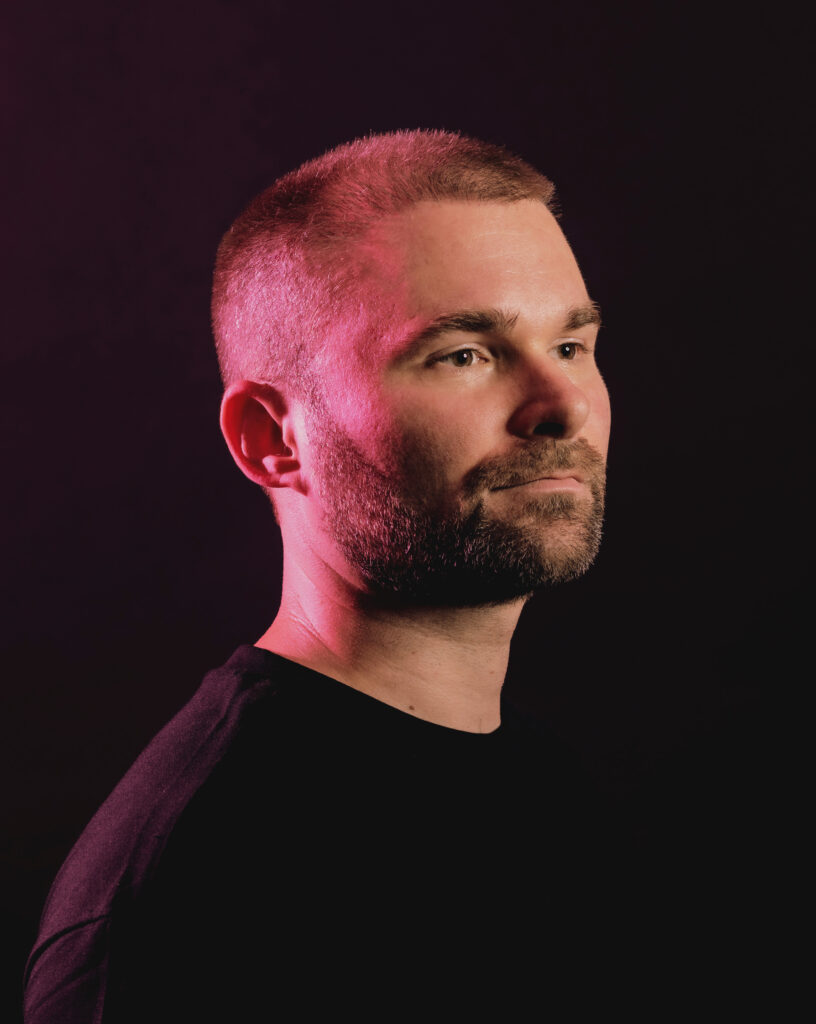
I am an American multi-disciplinary designer specializing in illustration branding, currently based in Rotterdam, The Netherlands.
With a decade of experience, I have worked in diverse industries, including music, technology, sustainability, and lifestyle. I’ve developed a bold graphic signature that blends iconic styles such as Bauhaus, pop psychedelia, and colorful constructivism.
I have been fortunate to work with several prominent clients, including Apple, Disney, The New York Times, Target, IBM, Salesforce, Citrix, and Stanford University. My work has received numerous industry awards and recognition and has been featured in leading design publications such as Communication Arts, Abduzeedo, and The ADC Awards.
Let’s connect and create something special together.
Selected Clients:
Apple
Target
Disney
IBM
Citrix
Colgate-Palmolive
The New York Times
Harry’s
Salesforce
Le Monde
Warby Parker
Wired
Stanford University
Awards & Recognition
Gràffica
Colossal
Abduzeedo
Wired
Fahrenheit Magazine
Vice
We And The Color
Comm Arts: Fresh
Comm Arts: Illustration Vol. 62
Label Magazine
Collater.al
ADC Awards
General Inquiries
hello@calvinsprague.com
Representation:
North America | Closer&Closer
hello@closerandcloser.co
Call +1.323.426.4409
Europe | Creasenso
hello@creasenso.com
Online shop:
shop.unionhaus.com
Social media:
Behance
Instagram
LinkedIn
What’s the guiding philosophy you have for your work or practice?
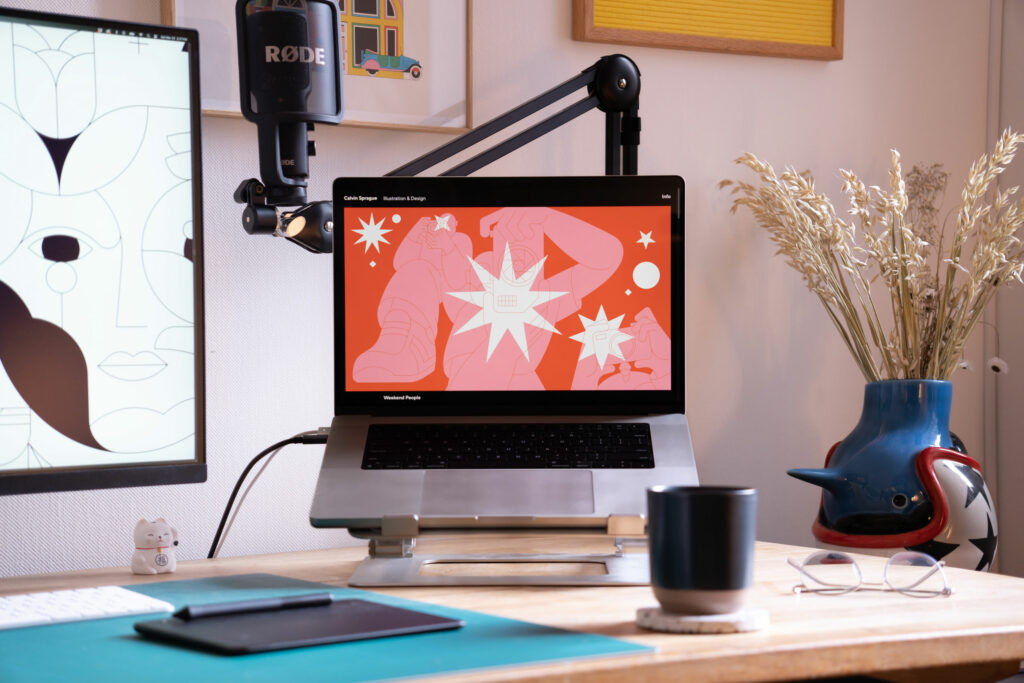
I believe in the power of congruency. Using specific angles, spacing, curves, and colors consistently throughout a piece helps to create a sense of balance. Whether it’s a particular angle or a curved line, repeating these qualities throughout a composition is essential. I strive to convey my message with as minimal line work as possible, which can be challenging and sometimes requires multiple adjustments.
What would you say are the defining characteristics of your work?
My work uses precise and balanced compositions crafted with simplified geometry and line work. I enjoy the idea of having multiple stories within an image. Even simple geometric shapes, like a circle, can be powerful in representing different subjects, such as the sun, an eye, or a camera lens. I strive to achieve elegance by balancing proper geometry, delicate lines, and smooth curves.